Skip to content
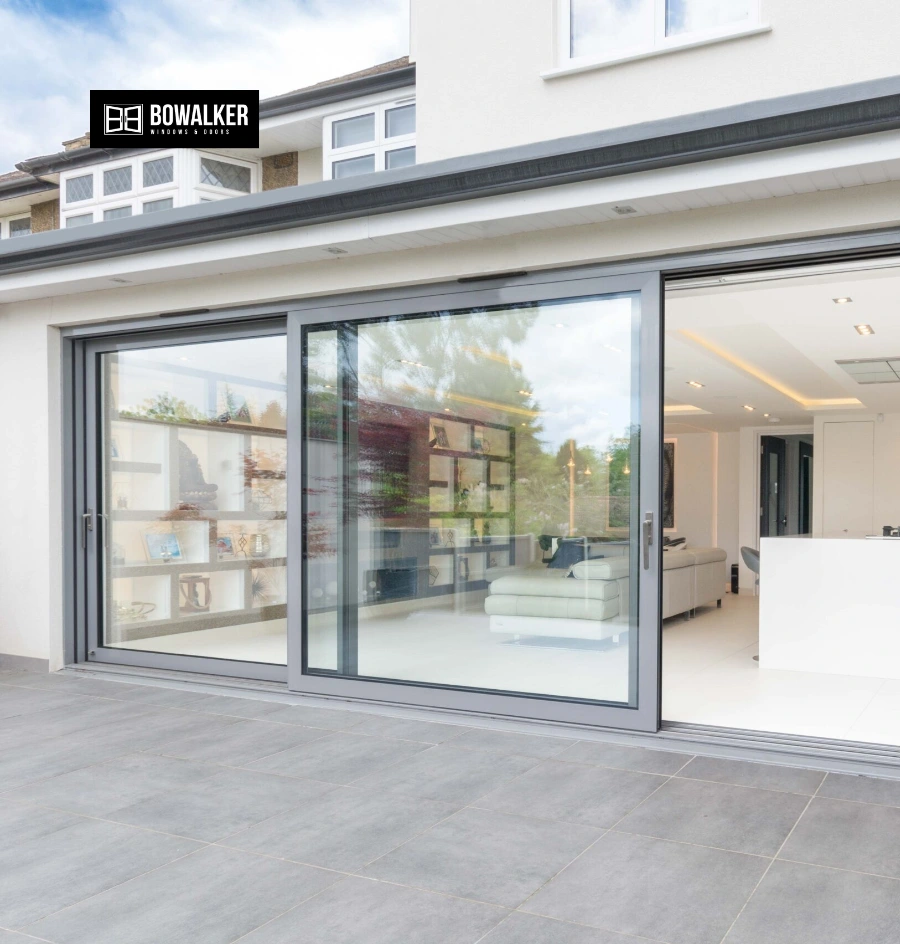
To secure sliding doors effectively, use a track blocker or patio security bar, install a secondary patio door lock or foot bolt, upgrade to a multipoint locking system, and fit anti-lift protection. Additionally, check and upgrade the Euro cylinder, reinforce the glass, add door and glass-break sensors, choose PAS 24 or Secured by Design-approved doors, lock the door properly every time and ensure fire escape safety is maintained. These measures must be tailored to the material type, as securing aluminium, uPVC and timber sliding doors each requires specific reinforcement techniques.
Understanding the importance of sliding door security involves recognising how burglars exploit weaknesses. Common methods include lifting the door off the track, jimmying or forcing the latch, picking or snapping weak locks, shimming the lock open, shattering or cutting the glass, exploiting worn or loose frames, or bypassing the lock through the door gap. Homeowners can counter these threats by installing mortise locks, pin locks, Charley bars, floor bolts, smart deadbolts, glass-break sensors and security film. Regular checks maintain functionality and long-term protection.
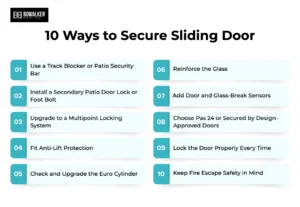
10 ways to secure a sliding door include:
- Use a Track Blocker or Patio Security Bar
- Install a Secondary Patio Door Lock or Foot Bolt
- Upgrade to a Multipoint Locking System
- Fit Anti-Lift Protection
- Check and Upgrade the Euro Cylinder
- Reinforce the Glass
- Add Door and Glass-Break Sensors
- Choose Pas 24 or Secured by Design-Approved Doors
- Lock the Door Properly Every Time
- Keep Fire Escape Safety in Mind
Use a Track Blocker or Patio Security Bar
Track blockers and patio security bars physically prevent sliding doors from being forced open, making them reliable options for securing them. A track blocker is a sturdy device that fits directly into the bottom track of a sliding patio door, stopping the door from sliding even if the main sliding door lock is bypassed.
Key steps to use a track blocker or patio security bar include:
- Place track blockers behind the closed door so the panel cannot be moved or lifted out of place without opening the door.
- Position security bars horizontally between the door frame and the sliding door to provide a strong physical barrier against forced-entry attempts.
- Adjust the length of the security rod to fit the frame at your preferred height, ensuring a snug fit that prevents sliding.
- Use devices that secure the door without excessive force on the frame. A proper fit reinforces the sliding glass door without damaging the track or alignment.
- Install a track blocker or security bar as a secondary lock to increase the resistance of your sliding patio doors to break-ins, supporting home security and providing greater peace of mind.
Install a Secondary Patio Door Lock or Foot Bolt
Put in a secondary patio door lock or foot bolt to physically secure sliding doors against forced entry and reinforce vulnerable access points. Add these heavy-duty devices to provide an extra layer of protection that prevents the door from being slid open or lifted out of its tracks, even if the primary lock is bypassed.
Core steps to install a secondary patio door lock or foot bolt include:
- Mount a foot bolt at the top or bottom of the moving panel so the metal bolt can slide directly into a fixed socket in the frame or track, physically blocking any sliding movement.
- Position a keyed lock on the frame or handle assembly to prevent the door from being operated from the outside without authorisation, thereby halting forced-entry attempts.
- Align the locking mechanisms accurately with the track or frame receiver before fastening. A proper fit ensures the bolt engages smoothly without jamming or distorting the door’s alignment.
- Secure the hardware using heavy-duty screws into the structural frame of the door. Robust installation prevents the lock from being dislodged or sheared off by brute force.
- Utilise smart lock variations to integrate with your home security system, allowing you to monitor access, receive activity alerts and verify that your secondary defences are locked via smartphone.
Upgrade to a Multipoint Locking System
Switch to a multipoint locking system to secure sliding doors at several points along the frame, making forced entry much more difficult than with a standard single-point lock. Put in a robust mechanism that engages multiple bolts or hooks into the door frame when the handle is lifted, or the key is turned, distributing the locking force across the entire length of the sliding patio door.
Key steps to upgrade to a multipoint locking system include:
- Select a multipoint system that is compatible with your existing door frame to ensure the hardware aligns perfectly and maintains the door’s structural integrity.
- Fit multiple bolts or hooks along the door’s vertical edge to distribute the locking force evenly, rather than relying on a single, vulnerable latch.
- Engage the robust mechanism by lifting the handle or turning the key to lock the sliding patio door securely at several points simultaneously.
- Verify that the locking points align smoothly with the frame receivers to establish a reliable barrier against attempts to force the sliding glass door open.
- Hire a professional installer to fit the complex system if necessary, ensuring a proper fit that protects the door’s alignment while providing increased security and peace of mind.
Fit Anti-Lift Protection
Set up anti-lift protection to prevent sliding doors from being lifted off their tracks, which is a common method intruders use to bypass standard locks. Install devices such as anti-lift bars, security rods, or track stoppers to prevent vertical movement of the door and make it much harder for someone to remove the panel from its frame.
Effective steps to fit anti-lift protection include:
- Measure the width of the sliding patio door before selecting your anti-lift bar or security rod to ensure a precise, gap-free fit.
- Fit the bar or rod securely above the moving panel so it sits tightly between the frame and the top of the door, completely stopping vertical lift.
- Place track stoppers within the upper or lower track channels to physically block the door from being levered upward out of its groove.
- Check that the devices allow the door to slide smoothly when unlocked without rubbing against the newly added security bars or rods.
- Include anti-lift protection as a permanent part of your security approach to reinforce sliding glass doors against forced entry and provide greater peace of mind.
Check and Upgrade the Euro Cylinder
Look into upgrading the euro cylinder or installing a multi-point lock to significantly improve sliding door security and make it harder for intruders to force or pick the lock. Change the central locking component inside the door handle to control the mechanism more efficiently, distribute the locking force and increase resistance to forced entry.
Main steps to check and upgrade the euro cylinder include:
- Check the security rating of your current euro cylinder to identify if it lacks anti-snap, anti-pick, or anti-drill protection.
- Remove the existing cylinder from the door handle assembly by unscrewing the retaining screw on the edge of the door panel.
- Measure the cylinder accurately from the central screw hole to both outer edges to ensure your new high-quality replacement fits flush without protruding.
- Slide the new anti-snap euro cylinder into the door frame and align it perfectly with the internal handle mechanism.
- Fix the hardware firmly in place with the retaining screw to secure the sliding patio door lock and provide greater peace of mind.
Reinforce the Glass
Strengthen the glass in sliding doors to increase resistance to break-ins and make it much harder for an intruder to force entry through the glazing. Replace standard, vulnerable glass panels with stronger alternatives or apply protective layers to build a tough barrier that slows down or deters a burglar attempting to smash through.
Key steps to reinforce the glass include:
- Assess the current glazing in your sliding patio doors to determine whether the existing panels use standard glass, which is highly vulnerable to sudden impacts.
- Fit toughened or tempered glass panels that are specifically processed to withstand heavy impacts and shatter into small, blunt pieces rather than sharp, dangerous shards.
- Install laminated glass for maximum intrusion resistance, utilising its bonded plastic interlayer to hold the glass firmly in place even if the surface is cracked by brute force.
- Apply heavy-duty security window film directly to the existing glass surface as a cost-effective alternative, ensuring the transparent film is smoothed out completely to hold shattered fragments together during an attack.
- Combine reinforced glass with electronic detection devices to create a comprehensive, layered security strategy that triggers an alert the moment a break-in is attempted, providing greater peace of mind.
Add Door and Glass-Break Sensors
Install door and glass-break sensors to alert homeowners to attempted entry by detecting exactly when a sliding door opens or glass breaks. Position these electronic devices to monitor for impacts and unauthorised movement, providing an early warning that complements your physical locks and barriers.
Key steps to add door and glass-break sensors include:
- Mount the two-part door sensors to the frame and the moving panel so that the system immediately triggers an alarm or notification when the door moves away from the frame.
- Place acoustic glass-break detectors within direct range of the sliding glass to ensure the microphone accurately identifies the specific sound frequency of shattering panels.
- Integrate the sensors directly into your central home security system to receive prompt alerts on your smartphone or to local emergency services during an intrusion attempt.
- Combine electronic sensors with heavy-duty security window film to create a multi-layered defence that physically slows down a burglar while simultaneously sounding the alarm.
- Test the range and battery life of each device consistently to maintain uninterrupted detection across your sliding patio doors and enjoy continuous peace of mind.
Choose Pas 24 or Secured by Design-Approved Doors
Select PAS 24 or Secured by Design-approved doors to comply with recognised UK security standards and resist common vulnerabilities. Choose these certified systems to ensure your sliding patio doors feature robust locking mechanisms, strong frames, and reinforced glazing designed to withstand forced-entry and lock-bypass attempts.
Effective steps to choose PAS 24 or Secured by Design-approved doors include:
- Check the product specifications for PAS 24 certification to verify that the sliding doors have been rigorously tested against physical attacks and manual manipulation.
- Look for the Secured by Design official approval to guarantee that the door incorporates enhanced security features and meets the strict quality controls preferred by police initiatives.
- Select a certified model that features built-in multi-point locks and anti-lift protection as part of its factory configuration to eliminate the need for aftermarket hardware.
- Confirm the door frame and reinforced glazing materials meet the standard’s requirements to establish a high-strength baseline defence for your home.
- Hire an accredited professional to install the certified door system to ensure it is fitted correctly, maintains its structural integrity and delivers maximum protection against break-ins.
Lock the Door Properly Every Time
Close the door properly every time to maintain a reliable defence and keep your home secure against opportunistic break-ins. Fully engage the locking mechanism by turning the handle or key until it clicks into place, eliminating simple oversights that leave the sliding panel vulnerable to forced entry.
Key steps to lock the door properly every time include:
- Turn the key or handle completely until the mechanism clicks, ensuring the internal bolts or hooks have fully engaged with the frame receivers.
- Develop a strict daily locking routine to ensure the sliding patio door is secured every single time it is closed, even if you are only stepping out of the room briefly.
- Avoid leaving the sliding door slightly open for ventilation when unattended, as even a small gap creates a massive vulnerability for intruders to leverage.
- Check the latch manually after locking by giving the handle a firm tug to confirm the door is completely immobile, and the lock has engaged.
- Deploy your anti-lift bars or security rods alongside the main lock to block vertical movement and prevent anyone from lifting the panel off its tracks from the outside.
Keep Fire Escape Safety in Mind
Ensure fire escape safety in mind to ensure emergency exits remain accessible while securing your sliding patio doors. Balance your security measures with emergency access requirements by maintaining hardware and tracking systems to ensure the door opens smoothly and quickly if a fast evacuation becomes necessary.
Core steps to keep fire escape safety in mind include:
- Select secondary locks that can be opened quickly from the inside without searching for a key, ensuring household members can escape instantly during an emergency.
- Maintain the sliding track regularly by cleaning out debris and applying lubricant so the door never sticks or jams when you need to force it open in a hurry.
- Position security bars and rods at an easily reachable height for everyone in the home, allowing for rapid removal during a fire evacuation.
- Upgrade to modern, easy-to-operate handle and lock designs that do not require complex manipulation or excessive physical strength to disengage under stress.
- Review your emergency exit routes with all household members to ensure everyone knows exactly how to remove the security devices and operate the sliding door safely.
How to Secure Different Types of Sliding Doors?
To secure different types of sliding doors, use robust multi-point locks or track locks for aluminium sliding doors, anti-lift devices and snap-secure euro cylinders for uPVC sliding doors and heavy-duty mortise locks or security bars for timber sliding doors. Using material-specific security methods helps protect the door’s structural integrity and maximise your home’s protection over time.
How to Secure Aluminium Sliding Doors?
To secure aluminium sliding doors, install a multi-point lock along the sturdy frame and add anti-lift devices to stop vertical movement. Reinforce the glass with laminated glazing or security film and integrate electronic sensors to establish a certified, high-security barrier.
Key steps to secure aluminium sliding doors include:
- Install a high-security multi-point locking system to ensure multiple bolts or hooks engage simultaneously along the frame when the handle is lifted.
- Maintain a strong, well-constructed aluminium frame that resists bending or warping to prevent intruders from prying the door panel open.
- Fit laminated or toughened glass panels into the frame to create a heavy-duty barrier that resists shattering from high impacts.
- Place anti-lift bars or track stoppers within the upper guide channels to physically block burglars from lifting the door off its tracks from the outside.
- Apply heavy-duty security window film directly over the internal glass surface to hold the pane together and slow down entry if the glass is struck.
- Mount electronic door and glass-break sensors to the frame to trigger immediate notifications through your home security system during an attempted breach.
- Choose sliding door models certified to PAS 24 or Secured by Design standards to guarantee the entire assembly has passed rigorous UK physical attack tests.
How to Secure uPVC Sliding Doors?
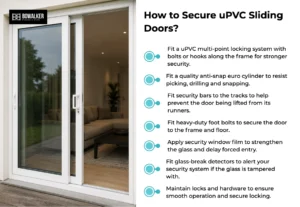
To secure uPVC sliding doors, install a multi-point lock along the flexible frame and fit an anti-snap euro cylinder within the handle mechanism. Reinforce the track with security bars and foot bolts to prevent the panel from being lifted or pried, and protect the glass with security film and sensors to establish a comprehensive, heavy-duty barrier.
Key steps to secure uPVC sliding doors include:
- Install a multi-point locking system designed for uPVC, engaging multiple bolts or hooks along the frame to distribute security across several points.
- Upgrade to a high-quality, anti-snap euro cylinder lock within the handle mechanism to resist specialised picking, drilling and snapping attempts.
- Place security bars or rods along the runner tracks to physically block intruders from lifting the flexible uPVC door panel off its runners.
- Fit heavy-duty foot bolts at the bottom of the sliding door to provide extra anchoring, securing the panel firmly to both the frame and the floor.
- Apply thick security window film over the glass panels to toughen the glazing, hold shattered fragments together, and delay forced-entry attempts.
- Integrate electronic glass-break detectors onto the frame to immediately alert your home security system if the sliding glass is struck or tampered with.
- Maintain the hardware and lock alignment consistently to ensure the multi-point hooks latch smoothly into the uPVC frame without sticking.
How to Secure Timber Sliding Doors?
To secure timber sliding doors, install heavy-duty bolt locks along the top and bottom of the natural wood frame. Eliminate structural gaps by maintaining proper track alignment, reinforce the glazing with security window film and perform consistent maintenance checks to prevent warping or rot from compromising your security.
Main steps to secure timber sliding doors include:
- Inspect the timber frame and track alignment regularly to fix any warping, rotting, or structural gaps that intruders could exploit with a crowbar.
- Install heavy-duty bolt locks at the top and bottom of the door to anchor the wooden panel firmly into the frame and prevent it from being forced open.
- Fit specialised sliding glass door locks as secondary locking points to reinforce the main mechanism and distribute resistance against brute force.
- Apply resilient security window film over the glass panels to significantly increase shatter resistance and prevent easy access through the glazing.
- Clean out debris and lubricate the runner track consistently to keep the heavy timber door sliding smoothly and ensure the locks align perfectly.
- Test each locking mechanism after installation to guarantee the bolts fully engage with their receivers without sticking or binding against the wood.
- Treat the timber periodically with protective sealants to maintain the material’s structural density, strength and resistance to physical attacks.
Why Is Sliding Door Security Important?
Sliding door security is important for UK homeowners because standard patio doors are often targeted by burglars as the easiest point of entry. Prioritising sliding door security is essential for effective burglary prevention, comprehensive property protection and long-term peace of mind. Because sliding doors are usually located at the rear of a property, they offer intruders a secluded area to exploit common vulnerabilities, such as weak latches or flexible frames. Implementing a layered defence significantly reduces the risk of break-ins, ensures your valuable assets remain safe and can even yield financial benefits by helping you meet the strict security requirements of standard UK home insurance policies.
How Burglars Target and Break Into Sliding Doors?
Burglars target and break into sliding doors by exploiting mechanical and structural vulnerabilities, including lifting the door off its track, jimmying or shimming weak locks, picking or snapping euro cylinders, shattering the glass, or leveraging worn frames and door gaps to force entry. Because these rear patio doors are often out of sight, intruders can quickly use these physical bypass techniques with minimal risk of being spotted by neighbours.
Lifting the Door off the Track
Burglars often target sliding doors because they can exploit gaps in the frame and lift the door panel upward to disengage it from the bottom track. Eliminate vertical frame clearance to prevent intruders from lifting sliding door panels out of their tracks.
Key Steps to Prevent Track Vulnerabilities:
- Install anti-lift blocks or track screws in the upper channel to prevent vertical travel.
- Place heavy-duty foot bolts at the base of the door to lock the moving panel firmly to the floor.
- Keep the upper guide rails free from debris so the safety blocks remain correctly positioned over the door frame.
Jimmying or Forcing the Latch
Burglars frequently target sliding doors with standard single-point latches by inserting a pry bar or screwdriver near the lock and applying force to disengage the latch. Replace standard single-point hook latches with multi-point hardware to protect sliding doors against brute-force leverage attacks.
Key Steps to Prevent Latch Vulnerabilities:
- Upgrade to an integrated multi-point locking system that engages multiple hooks simultaneously along the frame.
- Add aftermarket frame-mounted sash jammers to provide secondary physical resistance against heavy prying forces.
- Install reinforced steel strike plates to ensure the frame receivers can withstand aggressive horizontal leverage.
Picking or Snapping Weak Locks
Burglars target sliding doors with low-security locks by using lock-picking tools or applying force to snap weak lock cylinders. Upgrade standard handle assemblies to high-security cylinders to safeguard sliding doors against quiet, mechanical bypass techniques.
Key Steps to Prevent Cylinder Vulnerabilities:
- Upgrade the high-security lock by replacing standard cylinders with a 3-star anti-snap euro cylinder.
- Fit high-security handle backplates designed to shield the cylinder from prying tools.
- Choose locks featuring advanced anti-pick internal drivers and anti-drill hardened steel pins.
Shimming the Lock Open
A burglar slides a thin, flexible piece of plastic or metal into the gap between the closed door and the jamb, compressing the spring-loaded latch to open the door without damage.Utilise interlocking deadbolts that cannot be manipulated from the side to protect sliding doors against covert shim bypasses.
Key Steps to Prevent Mechanism Vulnerabilities:
- Install interlocking or hooked deadbolts that cannot be compressed or slipped backward from the side gap.
- Mount a dedicated metal frame guard or security flange to physically block tool access to the locking components.
- Check door alignment routinely to ensure the gap between the panel and the jamb remains too narrow for shims.
Shattering or Cutting the Glass
Burglars often target sliding doors by striking, shattering, or cutting the glass panel to create an opening or gain access to the lock from inside. Reinforce expansive glass panels with specialised security materials to protect sliding doors against forced entry through the glazing.
Key Steps to Prevent Glazing Vulnerabilities:
- Apply thick, polyester-based security window film directly over the interior glass surface to hold shattered fragments together.
- Upgrade existing single-pane glass to certified laminated glass featuring a tough, penetration-resistant PVB interlayer.
- Position electronic glass-break sensors on the frame to trigger a home alarm immediately upon high-impact shock.
Exploiting Worn or Loose Frames
Burglars exploit worn or loose sliding door frames because structural warping can create gaps that weaken the door’s overall security. Perform a timely sliding door lock replacement or full-frame repair when weather exposure and heavy use cause structural warping.
Key Steps to Prevent Structural Vulnerabilities:
- Monitor for sagging panels or shifting handles and replace the sliding door lock with adjustable strikes as needed.
- Treat timber door frames periodically with protective sealants to prevent soft patches of rot from compromising security.
- Tighten loose frame-to-wall fixings immediately to restore structural rigidity and eliminate any play in the door frame.
Bypassing the Lock Through the Door Gap
Burglars target sliding doors by exploiting gaps between the door panel and frame to access the locking mechanism without forcing the door open. Seal the structural openings that form between sliding panels to prevent burglars from inserting long wire tools to manipulate internal locks.
Key Steps to Prevent Gap Vulnerabilities:
- Adjust the bottom roller screws consistently to keep the moving door level and eliminate tapered gaps.
- Install interlocking metal meeting stiles or heavy-duty weatherstripping along the centre gap where the panels overlap.
- Clean out accumulated dirt and stones from the tracks regularly to prevent the door from riding up and creating openings.
What Types of Locks and Security Devices Are Available for Sliding Doors?
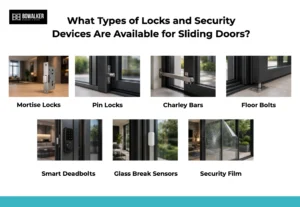
Types of locks and security devices available for sliding doors include integrated mortise locks, physical pin locks, adjustable charley bars, heavy-duty floor bolts, smart deadbolts, acoustic glass break sensors and protective security film. These options help reinforce the weakest points of your patio entry by blocking brute-force leverage, preventing track lifting and strengthening vulnerable glazing against impact.
- Mortise Locks
A mortise lock is a heavy-duty locking assembly installed directly inside a pocket carved into the sliding door panel edge. Its mechanism features a dual-hook or deadlatching bolt that hooks securely into a reinforced strike plate within the frame. Homeowners commonly use them because their recessed design allows panels to slide smoothly without hardware interference while providing deep structural engagement. They offer superior strength and reliability, but relying solely on factory-installed locks without upgrading to hardened steel leaves the door vulnerable to prying. Regular maintenance and timely upgrades prevent mechanical bypasses.
- Pin Locks
A pin lock is a secondary security device consisting of a hardened steel chassis and a heavy metal pin inserted through the frame directly into the stationary panel. They add substantial security by physically deadlocking overlapping panels together, completely preventing horizontal door movement and thwarting attempts to slide the door open. These devices are favoured for their ease of installation, requiring only precise drilling through the stiles. For optimal safety, select a reputable, FENSA-certified UK provider. When reviewing service quotes, ensure they explicitly detail hardware grade, installation quality, warranties and dedicated aftercare.
- Charley Bars
A Charley bar is an adjustable, surface-mounted security rod mounted horizontally between the rear edge of the active sliding door panel and the opposing wall jamb. It improves security by acting as a physical brace that blocks horizontal door movement entirely, leveraging physical counter-pressure to resist forced entry. When sourcing a professional installation, analyse the service quote to ensure it includes high-quality lock types, robust installation quality, a comprehensive hardware warranty and responsive customer aftercare. Evaluating these operational factors ensures a reliable purchasing decision for long-term home defence.
- Floor Bolts
A floor bolt is a heavy-duty mechanical security device installed at the base of a sliding door to prevent forced entry by anchoring the moving panel into a strike plate embedded directly in the floor track. Physically pinning the door downward, it makes lifting the panel off its tracks or sliding it open from the outside exceptionally difficult. This device is strictly installed at the bottom track to direct force into the solid foundation. Urgent professional help from an emergency locksmith is highly recommended if a break-in attempt or sudden mechanical failure leaves the bolts jammed.
- Smart Deadbolts
A smart deadbolt is an electronic locking device that integrates with a sliding door via slimline profiles to replace traditional keyed entry with digital access control. Key features include remote locking via smartphone apps, real-time access logs, temporary PIN codes and seamless compatibility with home security systems. They elevate home safety by eliminating vulnerable physical keyways susceptible to picking, allowing homeowners to monitor access and receive instant alerts. This integration provides a modern, highly trackable layer of defense that enhances overall sliding door security against unauthorized entry.
- Glass Break Sensors
A glass break sensor is an electronic monitoring device designed to identify forced entry attempts by detecting the precise structural failures of compromised patio glazing. The mechanism relies on acoustic microphones tuned to the high-frequency sound of shattering glass or internal vibration sensors that register heavy impact shock waves. Typically placed directly on or near the glass surface, these sensors integrate seamlessly with home alarm systems. This integration ensures homeowners are alerted instantly during a break-in, providing vital early warning before an intruder enters the property.
- Security Film
Security film is a heavy-duty, clear polyester layer applied directly to the interior surface of sliding door glass to reinforce it against impact. It resists intense smash-and-grab attempts and prolonged forced entry by absorbing heavy physical blows from blunt instruments like crowbars or bricks. The primary benefit is that while the glass may crack, the film holds shattered fragments firmly within the frame. This prevents intruders from creating a physical opening to step through or reaching inside to manipulate internal locking mechanisms.
How Often Should You Check and Maintain Sliding Door Security?
Sliding door security should be checked and maintained every 1 to 6 months to keep homes secure against opportunistic break-ins. Performing a monthly visual inspection allows homeowners to assess the condition of locks, tracks and glass, ensuring no structural degradation or alignment shifts have occurred over time. During this monthly routine, explicitly test the function of all secondary bolt locks and primary sliding glass door locks to confirm they engage smoothly and lock completely into place without forcing.
Basic maintenance actions should be executed during these checks by cleaning debris out of the tracks and lubricating moving lock parts as needed to prevent mechanical binding. Finally, schedule a comprehensive professional inspection annually, or immediately after any security incident, to guarantee the integrity of the entire sliding door entry system remains fully uncompromised.
What Are Common Mistakes to Avoid with Sliding Door Security?
The common mistakes to avoid with sliding door security include neglecting to lock the panel, relying on weak factory-installed hardware, failing to clean and align the tracks and overlooking secondary reinforcement measures like floor bolts or Charley bars. Neglecting these fundamental precautions leaves your patio entry highly vulnerable to quick, quiet break-ins by creating easy leverage points and single points of mechanical failure.
Below are the common mistakes to avoid with sliding door security
- Neglecting to Lock the Door: Leaving a sliding door unlocked eliminates your primary defence, allowing intruders to enter silently without tools. Eliminate this vulnerability by establishing a strict habit of locking the panel immediately upon closing.
- Using Weak or Outdated Factory Locks: Basic single-point factory latches snap easily under crowbar leverage, so upgrade to an integrated multi-point locking system with multiple hooks and a high-security, 3-star anti-snap cylinder lock.
- Failing to Maintain Tracks and Rollers: Track dirt and debris cause sliding panels to sag and create gaps that burglars leverage to lift the door off its tracks, so vacuum channels regularly and adjust bottom roller screws to eliminate vertical play.
- Overlooking Secondary Security Measures: Relying on a single primary lock creates a dangerous single point of failure if an intruder bypasses the cylinder. Install floor bolts at the base track to block lifting and deploy a horizontal Charley bar to brace the panel.
Should You Upgrade or Replace Your Sliding Door for Better Security?
You can upgrade your sliding door yourself or through a locksmith for regular security reinforcement and hardware fixes. Replace the entire sliding door system if the frame is severely warped, the glass is damaged, the tracks are unaligned, or the structural integrity is compromised beyond repair.
Upgrade the sliding door yourself or through a locksmith when:
- Secondary locks, like floor bolts or Charley bars, need to be added
- Factory-installed latches need to be replaced with multi-point locking systems
- High-security, 3-star anti-snap cylinders are needed to replace basic locks
- Tracks and rollers are intact but require cleaning, adjustment, or minor component swaps
- Security film or glass break sensors are being added to existing panels
Replace the entire sliding door system if:
- The door frame is bent, warped, or severely rotted, preventing secure locking
- The structural glass panels are cracked, shattered, or repeatedly failing to resist impact
- Severe alignment shifts make it impossible to keep the door seated flush in its tracks
- Persistent mechanical failures occur because the entire system is outdated or structurally weak
- A previous break-in has caused extensive, unfixable damage to the core frame and track assembly
Should You Hire a Professional or Do It Yourself to Secure Your Sliding Door?
You can secure the sliding door yourself for straightforward hardware installations and regular maintenance. Hire a professional locksmith or installer if the work requires structural alterations, advanced electronic setups, or certified compliance.
Secure the sliding door yourself when:
- Installing surface-mounted hardware like Charley bars or security film
- Adding simple, drop-in secondary track locks or foot bolts
- Performing routine track cleaning and roller alignment adjustments
Hire a professional if:
- Carving precise internal pockets for heavy-duty mortise lock upgrades
- Integrating smart deadbolts with complex home alarm monitoring networks
- Replacing the entire locking cylinder with high-security, multi-point systems to ensure exact frame alignment
How Much Does Sliding Door Installation Cost?
Sliding door installation costs range from £900 to £4,000+, depending on factors such as door material, size, glazing type, and security features. While basic uPVC units keep initial costs low, larger aluminium or timber setups push prices higher. Opting for enhanced security features, such as multi-point locking systems, 3-star anti-snap cylinders, and heavy-duty laminated security glass, will directly increase your final price.